
Commercial security systems should be planned with more than devices in mind. Cameras, access control, intrusion alarms, monitoring equipment, fire alarm systems, door hardware, and low-voltage infrastructure can all affect how a building operates, how it is inspected, and how it is maintained over time.
For commercial and industrial facilities, compliance-aware planning helps reduce avoidable problems before installation. A security system may improve protection, but it should also support safe egress, inspection readiness, documentation, reliable communication, cybersecurity, and long-term serviceability
.
Why Compliance-Aware Security Planning Matters
Security systems often interact with code-sensitive or operationally sensitive parts of a building. Access control may affect doors, locks, exit devices, and emergency egress. Fire alarm systems may require proper documentation, monitoring communication, notification coverage, and inspection support. Video surveillance may require attention to cybersecurity, user permissions, privacy-sensitive areas, retention, and network control.
Compliance-aware planning does not mean every security project is a legal compliance project. It means the system should be designed with awareness of the building environment, applicable standards, inspection expectations, and the way the facility actually operates.
Important planning areas may include:
- Access-controlled doors and emergency egress
- Electric strikes, electrified trim, and exit devices
- Fire alarm coordination and monitoring communication
- Inspection documentation and service records
- NDAA-aware camera selection where applicable
- Cybersecurity and user access control
- Low-voltage cabling and pathway documentation
- Monitoring communication paths
- Battery backup and system reliability
- AHJ coordination where required
- OSHA-aware workplace security planning
Access Control and Egress Coordination
Access control is one of the most important areas where compliance-aware planning matters. A controlled door has to protect the facility, but it also has to function correctly for everyday use and allow safe exit where required.
Card readers, mobile credentials, electric strikes, electrified trim, magnetic locks, request-to-exit devices, door contacts, fire alarm interfaces, and power supplies should be planned around the door opening. The door, frame, latch, closer, exit device, fire rating, and user workflow all matter.
A reader on the wall does not make a door properly planned. The full opening needs to be reviewed.
Fire Alarm and Life Safety Coordination
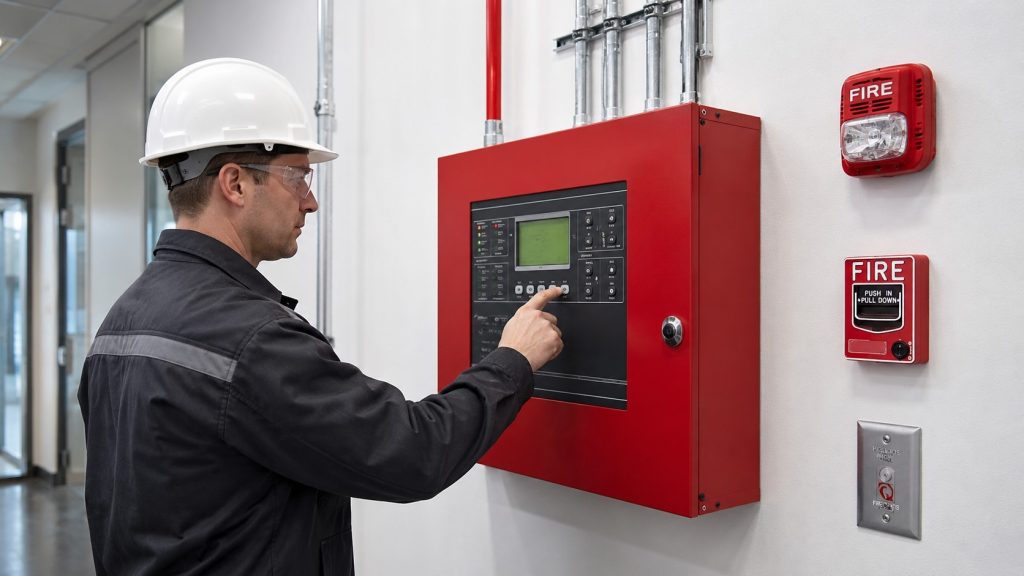
Commercial fire alarm systems require careful planning around detection, notification, monitoring, documentation, inspection, and long-term service. Fire alarm control panels, smoke detectors, heat detectors, pull stations, horn strobes, NAC power, batteries, annunciators, communication paths, and service records all play a role.
Facilities that undergo tenant changes, renovations, warehouse layout changes, additions, or equipment upgrades need especially strong documentation. Poor documentation can slow inspections, complicate service, and increase future costs.
Fire alarm planning should support both life safety and long-term facility management.
Video Surveillance, Cybersecurity, and Documentation
Video surveillance systems can also benefit from compliance-aware planning. Camera placement should support the security goal without creating unnecessary privacy or cybersecurity problems.
Commercial camera systems may require user permissions, secure remote access, network segmentation, NDAA-aware equipment decisions, retention planning, export controls, and clear documentation. These details matter more in healthcare properties, schools, municipal buildings, industrial facilities, warehouses, and multi-site commercial operations.
A commercial surveillance system should not be treated like a consumer camera package.
Low-Voltage Infrastructure and Serviceability
Security systems depend on the infrastructure behind the devices. Low-voltage cabling, network cabinets, PoE switches, fiber, UPS backup, alarm communication paths, access control panels, and equipment labeling all affect reliability.
A compliance-aware plan should consider whether the system can be serviced, expanded, inspected, and understood later. Clean cabling, accurate labeling, documented pathways, and organized equipment locations help facility managers and service technicians maintain the system over time.
Local Compliance-Aware Security Planning Resource
Businesses looking for a deeper planning resource can review Northeast Remote Surveillance and Alarm, LLC’s compliance hub here:
Regulatory and compliance planning for commercial security, fire alarm, and life safety systems
That hub supports commercial and industrial facilities reviewing security systems through the lens of fire alarm coordination, access-controlled openings, emergency egress, documentation, inspection readiness, workplace safety, cybersecurity, NDAA-aware planning, and operational life safety considerations.
Documentation and Inspection Readiness
Documentation is one of the strongest practical benefits of compliance-aware planning. Facilities may need device records, inspection reports, user access records, alarm monitoring information, fire alarm documentation, as-built notes, cable labels, system diagrams, battery records, and service history.
Good documentation supports facility owners, managers, inspectors, IT teams, service technicians, and future upgrades. It also reduces confusion when systems are expanded, repaired, tested, or modified.
Final Takeaway
Compliance-aware commercial security planning helps businesses build safer, cleaner, more reliable systems. It supports better access control decisions, stronger fire alarm coordination, more secure video surveillance, cleaner infrastructure, better inspection readiness, and stronger long-term serviceability.
For commercial and industrial facilities, security should be treated as building infrastructure. The strongest systems are planned not only for protection, but also for egress, documentation, inspection readiness, cybersecurity, and long-term operational reliability.