
Commercial fire alarm installation should be planned around the building layout, occupancy type, life safety requirements, inspection expectations, monitoring path, and long-term service needs. For Allentown offices, warehouses, manufacturing facilities, healthcare properties, schools, municipal buildings, retail properties, and multi-tenant commercial spaces, a fire alarm system should do more than meet a basic device count. It should support detection, occupant notification, monitoring, documentation, inspection readiness, and reliable building protection.
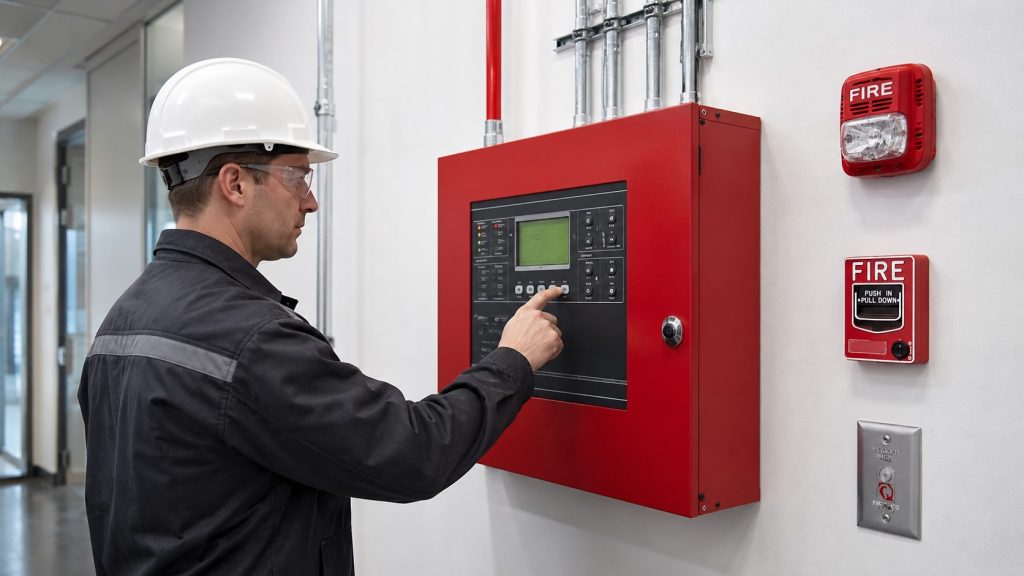
A properly planned commercial fire alarm system may include a fire alarm control panel, smoke detectors, heat detectors, pull stations, horn strobes, notification appliance circuits, NAC power supplies, batteries, monitoring communication, annunciators, sprinkler monitoring points, elevator interface points, duct detection where applicable, and service documentation. The strongest systems are planned around the building’s actual use, not a generic layout.
Why Fire Alarm Planning Matters
Many fire alarm issues begin with incomplete planning. A building may have devices installed, but the system may lack clear documentation, proper notification coverage, reliable communication, service access, updated drawings, or compatibility with future changes.
Commercial fire alarm planning should review:
- Fire alarm control panel condition
- Smoke and heat detection needs
- Pull station locations
- Horn strobe and notification coverage
- NAC power and circuit loading
- Battery backup
- Fire alarm monitoring communication
- Sprinkler monitoring points where applicable
- Annunciator location
- Device compatibility
- Inspection and testing requirements
- Building modifications and tenant changes
- Documentation and service records
- AHJ coordination where applicable
When these details are reviewed before installation or modification, the system is easier to inspect, service, document, and maintain.
Fire Alarm Systems for Different Allentown Facilities
Different Allentown facilities require different fire alarm planning.
Office buildings may need fire alarm coverage for tenant spaces, corridors, lobbies, mechanical rooms, shared areas, and building services. Warehouses may need planning around large open areas, loading zones, employee spaces, dock offices, storage configurations, and notification visibility. Manufacturing facilities may require coordination around production areas, industrial equipment, utility spaces, maintenance rooms, and building operations.
Healthcare and medical office environments may need careful planning around patient areas, staff-only spaces, exam areas, records rooms, and inspection documentation. Schools and municipal buildings may require strong documentation, clear notification coverage, and long-term serviceability.
The best fire alarm systems are designed around the building, the occupancy, and the operational realities of the facility.
Fire Alarm Monitoring and Communication
Fire alarm monitoring is an important part of commercial fire alarm planning. The system must be able to communicate alarm, supervisory, and trouble conditions through an approved and reliable path.
Many commercial facilities are moving away from older phone-line-based communication paths and reviewing cellular, IP, or approved communication alternatives. Communication planning should consider signal reliability, equipment compatibility, supervision, documentation, and monitoring requirements.
A strong fire alarm plan does not treat communication as an afterthought. Monitoring path reliability affects how the system reports events when they matter most.
Notification, Detection, and Power Planning
Fire alarm systems depend on properly planned initiating devices, notification appliances, power supplies, and backup batteries. Smoke detectors, heat detectors, pull stations, horn strobes, strobes, NAC circuits, and batteries must be selected and located with the building layout in mind.
Larger facilities may require additional NAC power supplies, properly calculated notification appliance circuits, accessible equipment locations, and updated documentation. A system that is difficult to service or poorly documented can become a long-term problem for building owners and facility managers.
Documentation and Inspection Readiness
Commercial fire alarm systems should be installed and maintained with inspection readiness in mind. Clear labeling, accurate device records, updated drawings, battery records, service notes, test reports, monitoring information, and panel documentation all support long-term system reliability.
Documentation becomes especially important when a building has tenant turnover, renovations, warehouse layout changes, additions, panel upgrades, or equipment changes. Poor documentation can slow service, complicate inspections, and make future modifications more expensive.
Local Allentown Fire Alarm Planning Resource
Businesses looking for a dedicated Allentown planning resource can review Northeast Remote Surveillance and Alarm, LLC’s Allentown fire alarm hub here:
Commercial fire alarm systems in Allentown, PA
That hub supports Allentown businesses planning commercial fire alarm installation, fire alarm monitoring, detection, notification, documentation, inspection readiness, life safety coordination, and long-term fire alarm system support.
Fire Alarm Systems Should Support the Larger Building Plan
Fire alarm systems should not be treated as isolated devices. They are part of the building’s life safety infrastructure and may need to coordinate with access control, emergency egress, elevators, sprinkler monitoring, HVAC shutdown, monitoring communication, and facility documentation.
For Allentown commercial and industrial properties, fire alarm planning should consider how the system will be installed, inspected, maintained, expanded, and supported over time.
Final Takeaway
Commercial fire alarm installation for Allentown facilities should be planned around detection, notification, monitoring, documentation, inspections, communication paths, and long-term serviceability. A properly planned system can help protect occupants, support emergency response, improve inspection readiness, and reduce future service problems.
For Allentown businesses and facilities, the strongest fire alarm systems are designed around the building layout, occupancy needs, code-sensitive coordination, and long-term operational reliability.