
Commercial intrusion alarm installation should be planned around the building layout, business hours, entry points, restricted areas, and after-hours risks that matter most. For Allentown offices, warehouses, manufacturing facilities, healthcare properties, retail businesses, schools, municipal buildings, contractor yards, and multi-tenant commercial spaces, an intrusion alarm system should do more than trigger a siren. It should help detect unauthorized entry, support monitoring, reduce false alarms, and fit the way the facility actually operates.
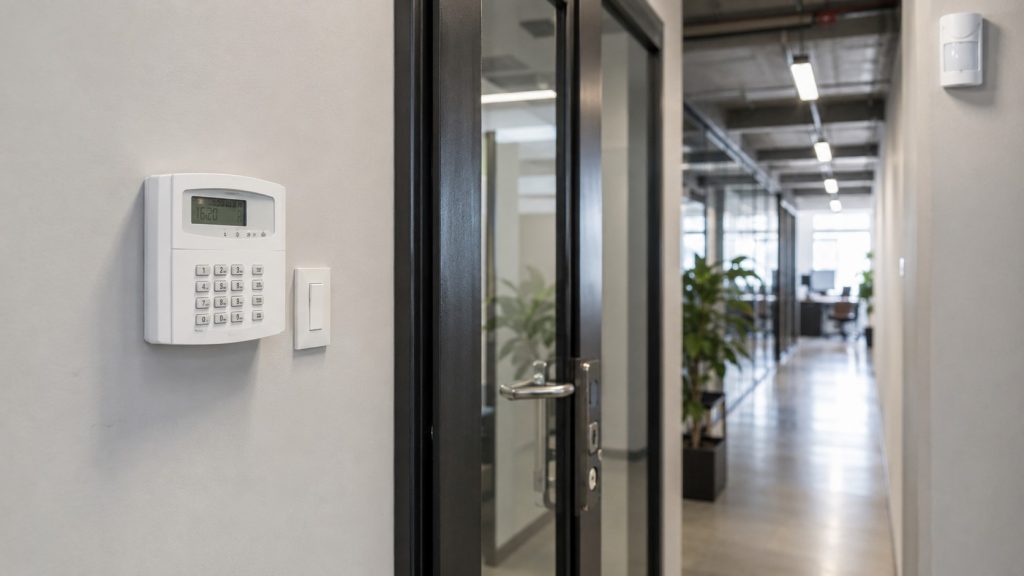
A properly planned intrusion alarm system may include door contacts, motion detectors, glass-break detection, keypads, panic devices, sirens, strobes, monitored communicators, zone expanders, user codes, schedules, and video verification where appropriate. The strongest systems are designed around real entry points, interior movement, user routines, and response expectations.
Why Intrusion Alarm Planning Matters
Many alarm problems start with weak planning. A business may have devices installed, but still miss secondary doors, overhead doors, storage rooms, rear entrances, or restricted interior spaces. In other cases, employees struggle with arming and disarming because user permissions, schedules, and keypad placement were not planned around daily operations.
Commercial intrusion alarm planning should review:
- Main entrances and employee entrances
- Rear doors and service doors
- Overhead doors
- Warehouse personnel doors
- Office suites and tenant areas
- Storage rooms and restricted spaces
- Motion detector placement
- Glass-break protection where appropriate
- Keypad locations
- User codes and permissions
- Opening and closing schedules
- Monitoring and dispatch procedures
- False alarm reduction
- Video verification or camera integration
When these details are reviewed before installation, the system is easier to use, easier to monitor, and better aligned with the facility.
Intrusion Alarm Systems for Different Allentown Facilities
Different Allentown businesses need different alarm designs.
Office buildings may need intrusion protection around suite entrances, reception areas, records rooms, IT rooms, shared spaces, and after-hours access points. Warehouses may need alarm coverage around employee entrances, shipping offices, dock-adjacent doors, overhead doors, inventory rooms, and interior movement paths. Manufacturing facilities may need intrusion detection for production-support areas, tool rooms, maintenance rooms, utility spaces, exterior doors, and restricted operational zones.
Retail and service businesses may need protection around storefront doors, rear service doors, stock rooms, cash-handling areas, and after-hours entry points. Healthcare and medical office environments may need alarm planning around staff-only spaces, records rooms, medication storage, entrances, and parking-related activity.
The best intrusion alarm systems are not built from a generic sensor count. They are planned around the building and how the business operates.
Monitoring, Communication, and Response
Commercial intrusion alarms are strongest when monitoring and communication paths are planned correctly. A local alarm may make noise, but monitored alarm signals can support a more structured response when the building is closed or unoccupied.
Planning should consider how signals are transmitted, who receives notifications, how dispatch is handled, what happens during opening and closing, and whether video verification or camera review should support alarm events.
Communication paths may include IP, cellular, or other approved methods depending on the system and monitoring requirements. Businesses should avoid relying on outdated or unreliable communication paths without reviewing the long-term plan.
Reducing False Alarms
False alarm reduction is a major part of commercial intrusion alarm planning. A system that creates nuisance alarms can frustrate employees, waste time, and reduce trust in the system.
False alarms may come from poor device placement, confusing user routines, weak training, unsecured doors, improper schedules, environmental conditions, or devices that do not match the area they protect.
A strong commercial alarm design considers how employees enter and exit, where keypads should be located, which areas need delayed entry, which areas should remain armed, and how users will manage the system day to day.
Local Allentown Intrusion Alarm Planning Resource
Businesses looking for a dedicated Allentown planning resource can review Northeast Remote Surveillance and Alarm, LLC’s Allentown intrusion alarm hub here:
Commercial intrusion alarm systems in Allentown, PA
That hub supports Allentown businesses planning commercial intrusion detection, monitored alarm systems, business entry protection, after-hours security, motion detection, door contacts, false alarm reduction, and integration with broader commercial security infrastructure.
Intrusion Alarms Should Support the Larger Security Plan
Intrusion alarms work best when they support the rest of the building’s security systems. Video surveillance can help review alarm events. Access control can help identify authorized entry. Remote monitoring can support after-hours response. Documentation can help managers understand zones, users, schedules, and system activity.
For Allentown commercial and industrial properties, intrusion detection should be treated as part of the facility’s security infrastructure, not just a keypad and a few sensors.
Final Takeaway
Commercial intrusion alarm installation for Allentown businesses should be planned around entry points, interior movement, operating hours, monitoring needs, and long-term system management. Door contacts, motion detectors, glass-break devices, keypads, communication paths, user codes, schedules, and response procedures should work together to protect the facility when it matters most.
For Allentown businesses, the strongest intrusion alarm systems are designed around the building layout, after-hours risks, employee routines, and the areas that need reliable protection.